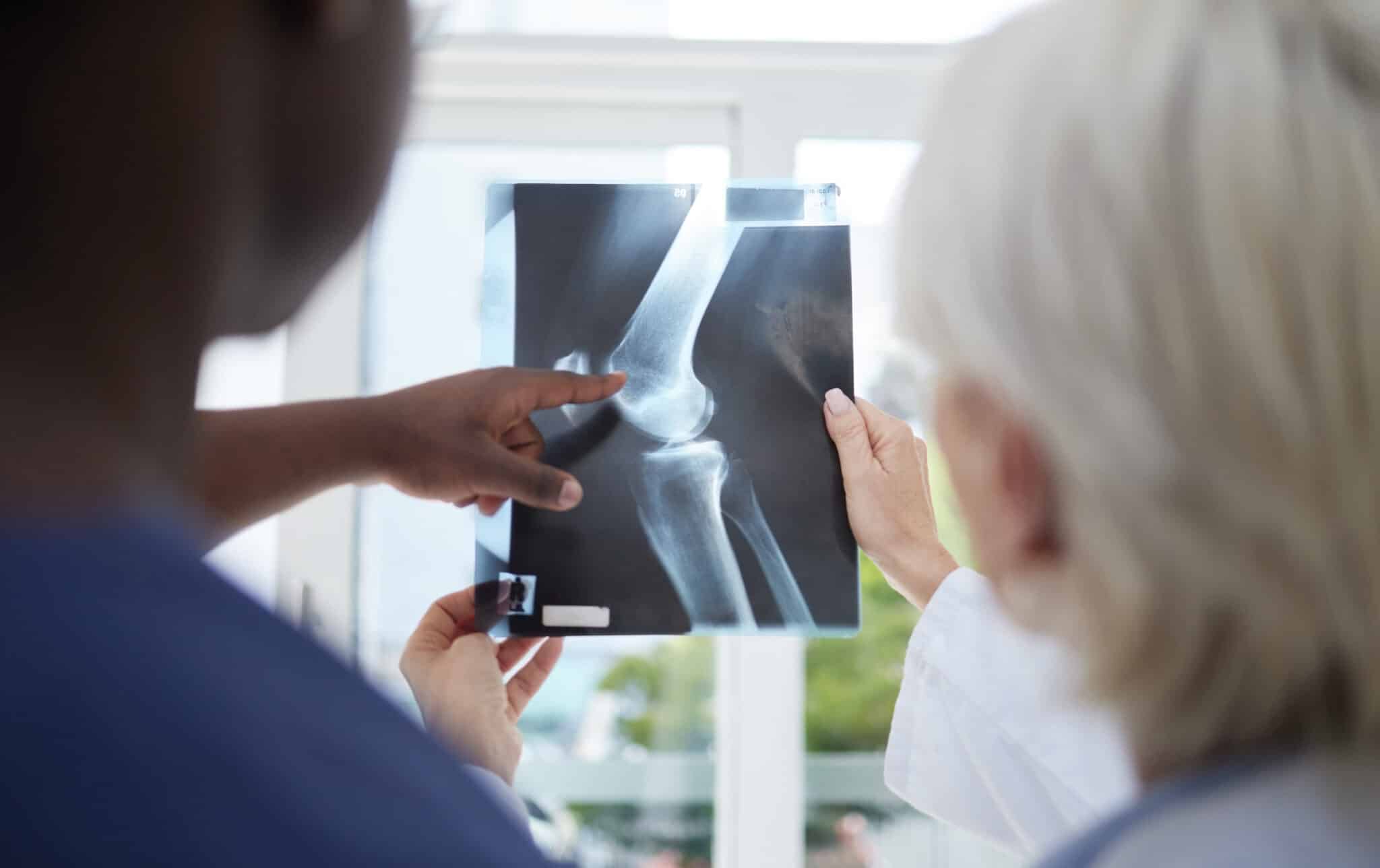
Our hands are vital in daily life, and hand or wrist pain can be a major obstacle.
From the mundane tasks of typing emails to the intricate maneuvers of tying shoelaces, our hands are indispensable. But what happens when our hands encounter obstacles like carpal tunnel syndrome or arthritis? The harmony of our routine is disrupted. At OrthoNJ, we understand your hands and wrists' pivotal role in your life. We have a team of orthopedic hand specialists, including doctors, nurses, and physical therapists, who are dedicated to diagnosing and treating a spectrum of hand and wrist conditions. Whether it's a fractured bone, the discomfort of carpal tunnel syndrome, or the constriction of Dupuytren's Contracture, we stand ready with a diverse array of treatments tailored to your needs. Let's delve into the realm of hand and wrist care, exploring common conditions, symptoms, at-home care techniques, and when it's time to seek the expertise of an orthopedic hand specialist.
Numbness in the thumb, index, middle, or ring fingers.
Tingling in the thumb, index, middle, or ring fingers.
Hand weakness.
Pain or discomfort in the wrist or hand, often worsening at night.
Arthritis:
Joint pain and stiffness.
Swelling around the joints.
Decreased range of motion.
Dupuytren's Contracture:
Thickening of the tissue beneath the skin of the palm.
Formation of nodules or cords.
Finger stiffness, particularly in the ring and little fingers.
Common Hand & Wrist Injuries:
Hand and Wrist Fractures:
Fractures in the hand and wrist can result from falls, direct blows, sports injuries, or accidents.
Symptoms may include pain, swelling, bruising, and difficulty moving the hand or wrist.
A fracture can happen in any of the bones in the hand or wrist, such as the metacarpals, phalanges, or radius.
Treatment may involve immobilization such as with a cast or splint; surgical intervention may be necessary to realign the bones in severe cases.
Wrist Sprains and Strains:
Wrist sprains and strains often occur due to sudden twisting or stretching of the hand or wrist beyond their normal range of motion.
A sprain refers to stretching or tearing ligaments, while a strain involves stretching or tearing muscles or tendons.
Symptoms may include pain, swelling, bruising, and difficulty moving the affected area.
Rest, ice, compression, and elevation (RICE) therapy are often recommended initially, followed by physical therapy to restore strength and flexibility.
Tendonitis:
Tendonitis is tendon inflammation, which can occur due to overuse or repetitive movements.
Common types of tendonitis in the hand and wrist include De Quervain's tenosynovitis (thumb tendonitis) and wrist tendonitis.
Symptoms may include pain, swelling, tenderness, and difficulty moving the affected tendon.
Treatment may involve rest, splinting, anti-inflammatory medications, and physical therapy.
Repetitive Strain Injuries (RSIs):
RSIs, also known as cumulative trauma disorders, develop over time due to repetitive movements or overuse.
Common RSIs affecting the hand and wrist include carpal tunnel syndrome, tendinitis, and intersection syndrome.
Symptoms may include pain, numbness, tingling, weakness, and reduced grip strength.
Prevention involves ergonomic adjustments, regular breaks, and strengthening exercises to reduce strain on the affected tissues.
Ligament Injuries:
Ligament injuries, such as a torn ligament in the wrist (wrist sprain), can result from trauma or repetitive stress.
Symptoms may include pain, swelling, instability, and weakness in the wrist.
Treatment depends on the severity of the injury and may range from conservative measures like rest and immobilization to surgical repair for severe tears.
How Do You Relieve Wrist Pain at Home
Rest and Immobilization:
Avoid activities that aggravate symptoms; using splints or braces to support your hand can help alleviate wrist pain.
Ice Therapy:
Ice therapy is an easy way to help with wrist pain. Apply ice packs for 15-20 min multiple times a day to reduce pain and inflammation.
Gentle Exercises:
To improve flexibility and strength, perform gentle exercises such as wrist stretches and range-of-motion exercises.
Ergonomic Adjustments:
Bad ergonomics can greatly aggravate wrist pain. Maintaining proper wrist alignment while typing or performing repetitive tasks and using supportive devices such as ergonomic keyboards or wrist pads can reduce strain and help alleviate hand and wrist pain.
When to See an Orthopaedic Hand Specialist For Hand Pain and Wrist Pain
While there are many things you can do at home to help alleviate hand and wrist pain, there are some reasons for concern that warrant a trip to the orthopaedic hand specialist.
To determine if your wrist pain is serious, pay attention to the following:
Persistent or worsening symptoms despite home care measures.
Inability to perform daily activities due to hand or wrist pain.
Signs of infection present, such as redness, warmth, or swelling around the affected area.
Severe trauma or injury to the hand or wrist requiring immediate attention.
Recognizing the signs and symptoms of common hand and wrist injuries is crucial for prompt intervention and optimal recovery. If you experience persistent pain, swelling, or difficulty performing daily activities, don't hesitate to seek evaluation and treatment from an orthopedic hand specialist at one of our OrthoNJ divisions. Whether through non-surgical interventions like physical therapy or surgical procedures performed by our skilled orthopedic surgeons, we're committed to restoring functionality and alleviating discomfort. We're here to provide expert care and support to help you overcome hand and wrist injuries and regain function and comfort.
Our OrthoNJ divisions span the entire state of New Jersey, so there is always an ONJ division with a hand specialist near you! To find a division, visit our directory: OrthoNJ Division Locator.
The cf_use_ob cookie informs Cloudflare to fetch the requested resource from the Always Online cache on the designated port. Applicable values are: 0, 80, and 443. The cf_ob_info and cf_use_ob cookies are persistent cookies that expire after 30 seconds.
session
__cfwaitingroom
The __cfwaitingroom cookie is only used to track visitors that access a waiting room enabled host and path combination for a zone. Visitors using a browser that does not accept cookies cannot visit the host and path combination while the waiting room is active.
session
cf_chl_rc_i
These cookies are for internal use which allows Cloudflare to identify production issues on clients.
session
cf_chl_rc_ni
These cookies are for internal use which allows Cloudflare to identify production issues on clients.
session
cf_chl_rc_m
These cookies are for internal use which allows Cloudflare to identify production issues on clients.
session
__cfruid
Used by the content network, Cloudflare, to identify trusted web traffic.
session
__cf_bm
Cloudflare's bot products identify and mitigate automated traffic to protect your site from bad bots. Cloudflare places the __cf_bm cookie on End User devices that access Customer sites that are protected by Bot Management or Bot Fight Mode. The __cf_bm cookie is necessary for the proper functioning of these bot solutions.
session
__cflb
When enabling session affinity with Cloudflare Load Balancer, Cloudflare sets a __cflb cookie with a unique value on the first response to the requesting client. Cloudflare routes future requests to the same origin, optimizing network resource usage. In the event of a failover, Cloudflare sets a new __cflb cookie to direct future requests to the failover pool.
session
_cfuvid
The _cfuvid cookie is only set when a site uses this option in a Rate Limiting Rule, and is only used to allow the Cloudflare WAF to distinguish individual users who share the same IP address.
session
cf_clearance
Whether a CAPTCHA or Javascript challenge has been solved.
session
__cfseq
Sequence rules uses cookies to track the order of requests a user has made and the time between requests and makes them available via Cloudflare Rules. This allows you to write rules that match valid or invalid sequences. The specific cookies used to validate sequences are called sequence cookies.
session
cf_ob_info
The cf_ob_info cookie provides information on: The HTTP Status Code returned by the origin web server. The Ray ID of the original failed request. The data center serving the traffic
session
These cookies are needed for adding comments on this website.
Name
Description
Duration
comment_author
Used to track the user across multiple sessions.
Session
comment_author_email
Used to track the user across multiple sessions.
Session
comment_author_url
Used to track the user across multiple sessions.
Session
Google Tag Manager simplifies the management of marketing tags on your website without code changes.
Name
Description
Duration
cookiePreferences
Registers cookie preferences of a user
2 years
td
Registers statistical data on users' behaviour on the website. Used for internal analytics by the website operator.
session
Statistics cookies collect information anonymously. This information helps us understand how visitors use our website.
Google Analytics is a powerful tool that tracks and analyzes website traffic for informed marketing decisions.
Contains information related to marketing campaigns of the user. These are shared with Google AdWords / Google Ads when the Google Ads and Google Analytics accounts are linked together.
90 days
__utma
ID used to identify users and sessions
2 years after last activity
__utmt
Used to monitor number of Google Analytics server requests
10 minutes
__utmb
Used to distinguish new sessions and visits. This cookie is set when the GA.js javascript library is loaded and there is no existing __utmb cookie. The cookie is updated every time data is sent to the Google Analytics server.
30 minutes after last activity
__utmc
Used only with old Urchin versions of Google Analytics and not with GA.js. Was used to distinguish between new sessions and visits at the end of a session.
End of session (browser)
__utmz
Contains information about the traffic source or campaign that directed user to the website. The cookie is set when the GA.js javascript is loaded and updated when data is sent to the Google Anaytics server
6 months after last activity
__utmv
Contains custom information set by the web developer via the _setCustomVar method in Google Analytics. This cookie is updated every time new data is sent to the Google Analytics server.
2 years after last activity
__utmx
Used to determine whether a user is included in an A / B or Multivariate test.
18 months
_ga
ID used to identify users
2 years
_gali
Used by Google Analytics to determine which links on a page are being clicked
30 seconds
_ga_
ID used to identify users
2 years
_gid
ID used to identify users for 24 hours after last activity
24 hours
_gat
Used to monitor number of Google Analytics server requests when using Google Tag Manager