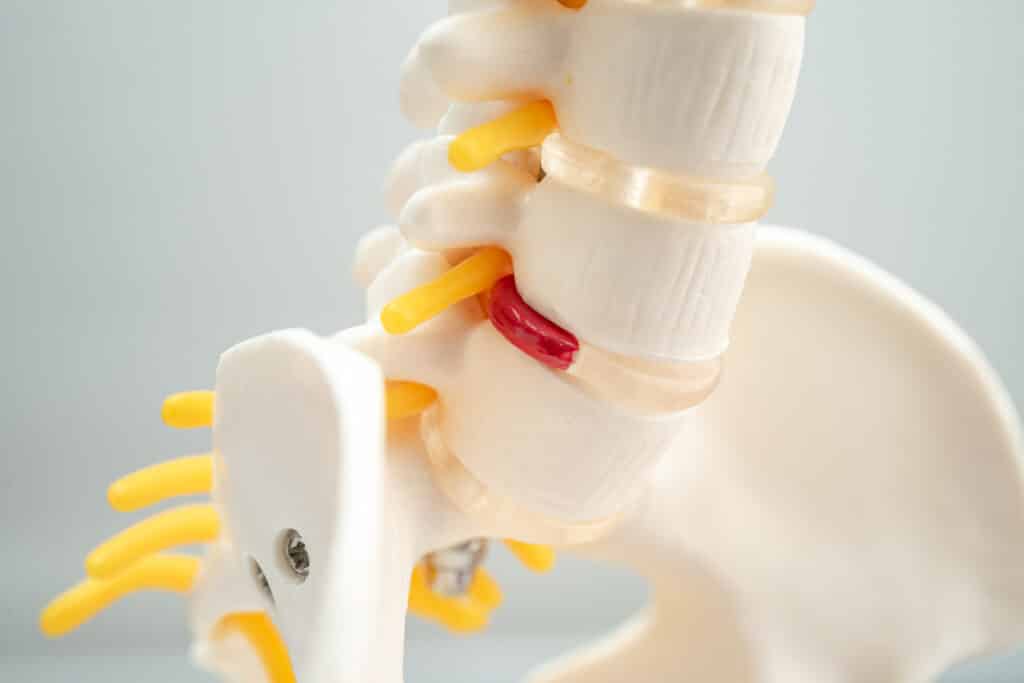
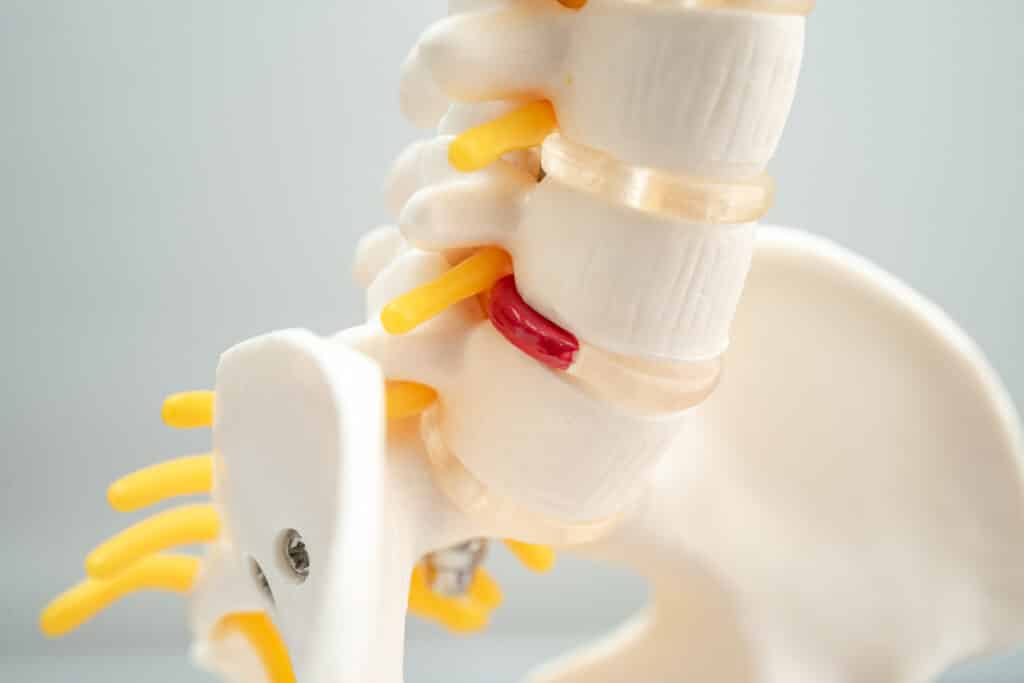
Discover what degenerative disc disease means, common symptoms, how clinicians evaluate it, treatment options nonoperative and surgical, and typical recovery expectations. If you have specific concerns, talk with your healthcare provider about your situation.
Discs sit between the vertebrae and help your spine move while absorbing shock. Over time discs may lose height and hydration and develop small tears or bulges. These are often age related and common.
Imaging can show these age related changes even in people without pain. That means scans do not always match symptoms. Clinicians combine your history, physical exam, and imaging to decide what is likely causing your pain and what treatment is most appropriate.
What is Degenerative Disc Disease?
Degenerative disc disease refers to age related wear and changes of the spinal discs. Discs can become thinner, drier, and less flexible which may alter joint mechanics. Some people have pain from these changes while others do not. A diagnosis focuses on matching symptoms and exam findings to imaging when needed.
Symptoms You May Notice
Symptoms vary by the spinal level involved and whether a nerve is irritated. Many people have minimal or no pain despite visible changes on scans.
Local neck or back pain, often worse with bending, lifting, or twisting
Pain that flares for days to weeks then improves
Radiating pain, numbness, or tingling into an arm or leg when a nerve is irritated
Weakness in an arm or leg with more significant nerve compression
How Clinicians Evaluate Suspected Degenerative Disc Disease
Evaluation begins with a focused history and physical exam to understand how pain affects function and whether nerves are involved. This guides testing and treatment choices.
Common imaging and diagnostic tests:
X ray shows bone alignment and disc height but does not show soft tissues well
MRI is the most useful test to see discs and nerves and can identify degeneration, herniation, or spinal canal narrowing
CT or CT myelogram can be used when MRI is not possible or when detailed bone images are needed
Diagnostic injections or nerve blocks can help confirm the source of pain when the diagnosis is unclear
Why Discs Change Over Time
Disc changes are part of aging for many people. Loss of disc fluid and elasticity, small tears in the disc rings, genetics, prior injury, smoking, and repeated loading contribute to wear. These changes do not always cause pain.
Treatment Options - Nonoperative Care First
Nonoperative care is the usual first approach unless there are urgent neurologic findings. Many people improve without surgery. Below are common options with typical benefits, risks, and timeframes.
Activity modification and self care:
Benefits - reduces triggers of pain and allows healing.
Risks - over-rest can weaken muscles.
Typical timeframe - immediate use, often improved within days to weeks as other measures are added.
Medications:
Benefits - short term pain relief to allow function and therapy.
Risks - NSAIDs can cause stomach, kidney, or cardiovascular side effects in some people; acetaminophen has liver risks at high doses; neuropathic agents can cause drowsiness or other side effects.
Typical duration - short term, often days to a few weeks while other treatments begin.
Risks - temporary increase in pain if progressed too quickly.
Typical program length - commonly 6 to 12 weeks, with many patients seeing measurable benefit by 4 to 8 weeks.
Injections (for radicular or facet pain):
Benefits - epidural steroid injections or facet injections can reduce inflammation and radicular pain and help bridge to rehabilitation.
Risks - infection, bleeding, transient increase in pain, steroid side effects such as temporary blood sugar rise and rare effects on bone density or infection risk.
Typical effect duration - variable, often weeks to months; some people have meaningful relief lasting months. Common practice limits the number of injections over a given period - for example up to 3 injections in 6 months in many practices - but approaches vary.
Diagnostic injections or nerve blocks:
Benefits - can help confirm which structure is causing pain.
Risks - similar to injections above.
Typical use - single procedures to guide treatment decisions.
Timeframe - benefits accumulate over months to years.
When Surgery May Be Considered
Surgery is considered when there is severe or progressive neurologic deficit, loss of function, or persistent pain that limits life despite a reasonable period of nonoperative care and when surgical yields are likely to meet patient goals. Decisions are individualized and weigh potential benefits against risks.
Discectomy (removal of herniated disc fragment): Benefits - can provide relatively rapid relief of radicular pain and improve function. Risks - infection, bleeding, nerve injury, recurrent herniation at the same level. Typical recovery - many patients notice marked improvement within days to weeks; return to light work in 2 to 6 weeks is common; full recovery varies.
Spinal fusion: Benefits - stabilizes a painful motion segment and can relieve pain caused by abnormal motion. Risks - nonunion where bones do not fuse, hardware problems, adjacent segment degeneration, infection, nerve injury. Typical recovery - longer course with gradual improvement over months; return to light activity often 6 to 12 weeks and to heavy work 3 to 9 months or longer depending on healing and job demands.
Artificial disc replacement: Benefits - for selected patients may preserve motion compared with fusion and relieve pain. Risks - device related complications, wearing out over time, potential need for revision surgery. Typical recovery - variable, often months to feel substantially better; candidacy is selective.
Rehabilitation and What Recovery Looks Like
Rehab is important whether you receive nonoperative care or surgery. Physical therapy focuses on pain control, restoring safe motion, and building strength to support the spine. Progress is individual. Follow your care team's guidance to avoid setbacks from returning too quickly to high risk activity.
Common rehabilitation stages include pain control, reconditioning, and graded return to activity. The timing of each stage varies with the diagnosis, treatment, and personal health factors.
Evidence-based Recovery Timelines and Variability
These timelines are general estimates and individual recovery can be faster or slower based on the condition, treatment, age, overall health, work demands, and adherence to therapy. Recommendations are consistent with professional society guidance.
Nonoperative care: Many people with axial back or neck pain improve within 4 to 12 weeks with structured therapy, activity modification, and medications. Some people require longer or ongoing self management.
Radicular pain treated with injections: Some patients experience weeks to months of relief. Injections often serve as a bridge to rehabilitation. Repeat injections may be considered in selected cases but benefits vary.
After discectomy: Many patients have meaningful relief of leg pain within days to weeks; return to light activities often in 2 to 6 weeks; return to heavy labor or impact sports typically in 6 to 12 weeks, depending on surgeon recommendations.
After fusion: Noticeable improvement may occur over weeks but full bone healing and maximal recovery commonly take 3 to 12 months; some residual stiffness or limitations may persist.
After artificial disc replacement: Recovery is variable; many patients regain activity over months and may have preserved motion compared with fusion.
Your clinician will discuss expected timelines and how your personal health factors affect recovery.
Red Flags and When to Seek Urgent Evaluation
Some symptoms suggest a serious problem that needs urgent evaluation. Seek immediate medical attention if you have any of the following:
Sudden severe back or neck pain after trauma
New bowel or bladder dysfunction, such as inability to pass urine or new incontinence
Saddle numbness affecting the groin or inner thighs
Rapidly progressive weakness in one or both legs or arms
Fever, chills, or signs of infection with worsening spine pain
Unexplained weight loss, a history of cancer, or recent intravenous drug use in the setting of new spine pain
If you have any of these red flags go to the nearest emergency department or call your provider for urgent evaluation.
When to Contact your Clinician
Contact your clinician for new or worsening numbness or weakness, pain that is not controlled with prescribed measures, new fever, new problems with walking or balance, or concerns about wound healing after surgery.
Shared Decision Making and Realistic Expectations
Treatment choices should match your goals, values, and tolerance for risk. Many treatments reduce pain and improve function but no treatment can be guaranteed to fully resolve symptoms for every person. Discuss benefits, risks, and alternatives with your clinician so you can make an informed choice.
Common Questions
Will my disc look normal as I get older?
Age related disc changes are common. Many people have imaging findings without symptoms. Clinicians focus on matching your symptoms and exam to imaging before recommending treatment.
Can physical therapy help without surgery?
Yes. Many people get meaningful symptom relief and improved function with a structured physical therapy program combined with activity modification and lifestyle changes.
Guideline Alignment
These recommendations reflect common practice and align with guidance from professional spine societies. Discuss how these general principles apply to you with your healthcare team.
Next Steps
If persistent spine pain limits your life, talk with your primary care clinician or a spine specialist to review your history and exam, and to discuss imaging or treatment options that match your goals.
Find An OrthoNJ Location
Contact one of OrthoNJ's locations spread out through all of New Jersey.
This treatment info is for informational purposes only.Treatment and recovery vary person to person, and you should consult with your treating physician and team for details on your treatment and recovery process.
The cf_use_ob cookie informs Cloudflare to fetch the requested resource from the Always Online cache on the designated port. Applicable values are: 0, 80, and 443. The cf_ob_info and cf_use_ob cookies are persistent cookies that expire after 30 seconds.
session
__cfwaitingroom
The __cfwaitingroom cookie is only used to track visitors that access a waiting room enabled host and path combination for a zone. Visitors using a browser that does not accept cookies cannot visit the host and path combination while the waiting room is active.
session
cf_chl_rc_i
These cookies are for internal use which allows Cloudflare to identify production issues on clients.
session
cf_chl_rc_ni
These cookies are for internal use which allows Cloudflare to identify production issues on clients.
session
cf_chl_rc_m
These cookies are for internal use which allows Cloudflare to identify production issues on clients.
session
__cfruid
Used by the content network, Cloudflare, to identify trusted web traffic.
session
__cf_bm
Cloudflare's bot products identify and mitigate automated traffic to protect your site from bad bots. Cloudflare places the __cf_bm cookie on End User devices that access Customer sites that are protected by Bot Management or Bot Fight Mode. The __cf_bm cookie is necessary for the proper functioning of these bot solutions.
session
__cflb
When enabling session affinity with Cloudflare Load Balancer, Cloudflare sets a __cflb cookie with a unique value on the first response to the requesting client. Cloudflare routes future requests to the same origin, optimizing network resource usage. In the event of a failover, Cloudflare sets a new __cflb cookie to direct future requests to the failover pool.
session
_cfuvid
The _cfuvid cookie is only set when a site uses this option in a Rate Limiting Rule, and is only used to allow the Cloudflare WAF to distinguish individual users who share the same IP address.
session
cf_clearance
Whether a CAPTCHA or Javascript challenge has been solved.
session
__cfseq
Sequence rules uses cookies to track the order of requests a user has made and the time between requests and makes them available via Cloudflare Rules. This allows you to write rules that match valid or invalid sequences. The specific cookies used to validate sequences are called sequence cookies.
session
cf_ob_info
The cf_ob_info cookie provides information on: The HTTP Status Code returned by the origin web server. The Ray ID of the original failed request. The data center serving the traffic
session
These cookies are needed for adding comments on this website.
Name
Description
Duration
comment_author
Used to track the user across multiple sessions.
Session
comment_author_email
Used to track the user across multiple sessions.
Session
comment_author_url
Used to track the user across multiple sessions.
Session
Google Tag Manager simplifies the management of marketing tags on your website without code changes.
Name
Description
Duration
cookiePreferences
Registers cookie preferences of a user
2 years
td
Registers statistical data on users' behaviour on the website. Used for internal analytics by the website operator.
session
Statistics cookies collect information anonymously. This information helps us understand how visitors use our website.
Google Analytics is a powerful tool that tracks and analyzes website traffic for informed marketing decisions.
Contains information related to marketing campaigns of the user. These are shared with Google AdWords / Google Ads when the Google Ads and Google Analytics accounts are linked together.
90 days
__utma
ID used to identify users and sessions
2 years after last activity
__utmt
Used to monitor number of Google Analytics server requests
10 minutes
__utmb
Used to distinguish new sessions and visits. This cookie is set when the GA.js javascript library is loaded and there is no existing __utmb cookie. The cookie is updated every time data is sent to the Google Analytics server.
30 minutes after last activity
__utmc
Used only with old Urchin versions of Google Analytics and not with GA.js. Was used to distinguish between new sessions and visits at the end of a session.
End of session (browser)
__utmz
Contains information about the traffic source or campaign that directed user to the website. The cookie is set when the GA.js javascript is loaded and updated when data is sent to the Google Anaytics server
6 months after last activity
__utmv
Contains custom information set by the web developer via the _setCustomVar method in Google Analytics. This cookie is updated every time new data is sent to the Google Analytics server.
2 years after last activity
__utmx
Used to determine whether a user is included in an A / B or Multivariate test.
18 months
_ga
ID used to identify users
2 years
_gali
Used by Google Analytics to determine which links on a page are being clicked
30 seconds
_ga_
ID used to identify users
2 years
_gid
ID used to identify users for 24 hours after last activity
24 hours
_gat
Used to monitor number of Google Analytics server requests when using Google Tag Manager