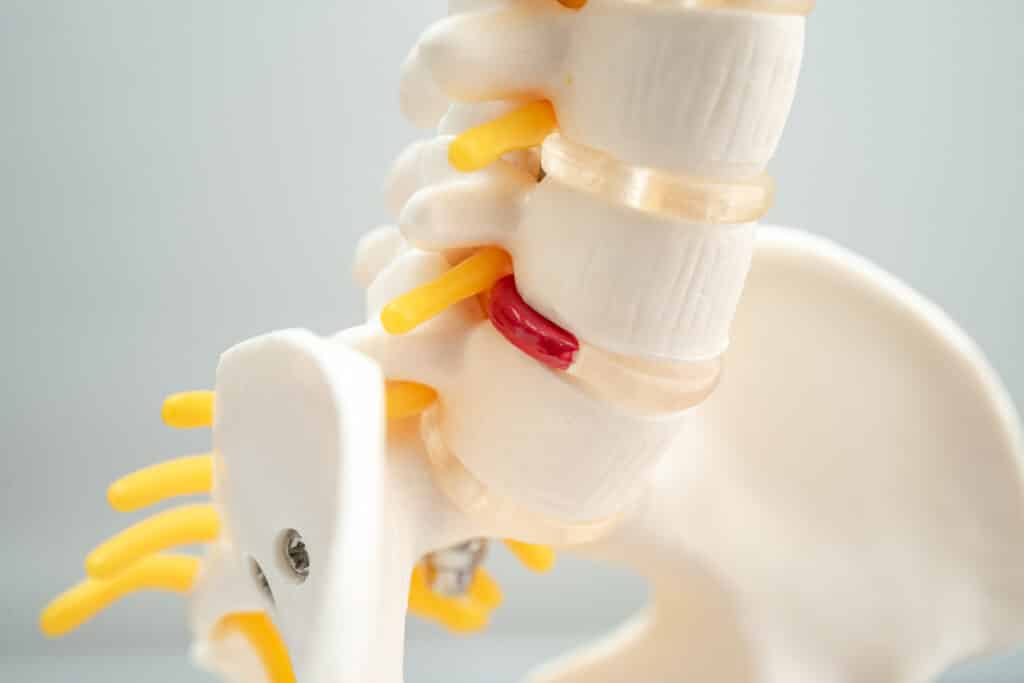
Are you someone who’s been sidelined by persistent pain or mobility issues, struggling to keep up with your favorite activities? Perhaps nagging discomfort has turned into something more serious, making it difficult to train, compete, or move with ease. You’ve tried rest, stretches, massages, and over-the-counter remedies, but nothing seems to work. When surgery is suggested, it’s natural to hesitate. But there may be another option: seeing a physiatrist.
If pain, mobility challenges, or physical limitations—whether due to injury, a chronic condition, or aging—are holding you back, a physiatrist might be the solution. But what exactly does a physiatrist do, and how can they help?
What is a Physiatrist?
A physiatrist is a medical doctor (MD or DO) who specializes in physical medicine and rehabilitation (PM&R). Their goal is to improve your quality of life by addressing pain and physical impairments in a non-surgical way. Unlike surgeons, physiatrists don’t perform operations. Instead, they focus on comprehensive, personalized care to help patients regain strength, mobility, and independence.
Physiatrists treat conditions involving the musculoskeletal system, nervous system, and soft tissues. They are experts in diagnosing complex conditions and creating treatment plans that often combine therapies, medications, and minimally invasive procedures.
What Does a Physiatrist Do?
Physiatrists take a holistic approach to patient care, focusing on the entire person rather than just the site of pain or injury. Their work includes:
Diagnosing underlying conditions: Using advanced imaging, nerve studies (like EMG), and a thorough patient history, physiatrists identify the root cause of pain or dysfunction.
Creating treatment plans: These plans, tailored to each patient, may involve physical therapy, occupational therapy, medications, or other interventions.
Performing non-surgical procedures: These include cortisone injections, platelet-rich plasma (PRP) therapy, ultrasound-guided injections, and nerve blocks.
Coordinating multidisciplinary care: Physiatrists often work with physical therapists, orthopaedic surgeons, neurologists, and other specialists to ensure comprehensive treatment.
Supporting rehabilitation: They help patients recover from surgeries, injuries, or illnesses by focusing on restoring strength, balance, and functional ability.
When Should You See a Physiatrist?
You might benefit from seeing a physiatrist if:
You have chronic pain: Persistent back, neck, or joint pain that hasn’t improved with basic treatments.
Your mobility is limited: Difficulty walking, climbing stairs, or performing daily activities due to pain or stiffness.
You’re recovering from surgery: Such as a joint replacement or spinal surgery.
You want to avoid surgery: If you’re seeking non-surgical solutions to manage your condition.
You have a neurological condition: Stroke, multiple sclerosis, or spinal cord injury affecting your movement.
You’re dealing with a sports injury: Sprains, strains, or overuse injuries that impact your ability to stay active.
Common Conditions Physiatrists Treat
Physiatrists work with a broad range of patients and conditions, including:
Both physiatrists and pain management specialists focus on reducing pain, but their methods and goals differ:
Physiatrist:
Focuses on improving overall function and mobility.
Uses rehabilitation-based therapies and physical reconditioning.
Avoids long-term reliance on pain medications.
Pain Management Specialist:
Primarily targets pain reduction.
May use opioid medications, nerve blocks, or other interventional treatments.
Doesn’t always address the functional impact of pain on daily activities.
A physiatrist may collaborate with a pain management specialist if your condition requires a combination of approaches.
Why Choose an OrthoNJ Doctor for Your Care?
OrthoNJ is different from your typical medical provider. Unlike many in the industry, we prioritize patient care over profits. Our six divisions work collaboratively to ensure the best outcomes for our patients. We believe in the "Power to Put Patients First," our doctors and divisional partners strive to uphold this commitment to our patients in every aspect of our medical care.
With over 120 fantastic physicians, all board-certified, board-qualified, or fellowship-trained, OrthoNJ offers top-tier expertise across a wide range of specialties.
We serve over 250 communities throughout New Jersey, providing treatment and continuing care for various orthopedic needs.
With more than 30 statewide offices, our reach extends across the entire state. Whether in North Jersey, South Jersey, or anywhere between, OrthoNJ proudly serves you.
The Benefits of Seeing a Physiatrist
Choosing a physiatrist can make a significant impact on your life:
Personalized care: Your treatment plan is tailored to your unique goals and challenges.
Comprehensive approach: Rather than treating symptoms, physiatrists focus on the root cause of your pain or limitation.
Improved quality of life: By restoring strength, mobility, and independence, they help you return to the activities you love.
What to Expect at Your First Appointment
Your first visit with a physiatrist will likely include:
Comprehensive evaluation: Discuss your medical history, current symptoms, and functional limitations.
Physical examination: Assess strength, range of motion, posture, and balance.
Diagnostic testing: Order imaging studies (X-rays, MRIs) or nerve tests (EMG) if necessary.
Treatment planning: Develop a customized plan to address your specific needs and goals.
Take the Next Step
At OrthoNJ, our team of board-certified physiatrists serves patients throughout North Jersey, South Jersey, and the greater NYC and Philadelphia metro areas. Whether you’re recovering from an injury or dealing with chronic pain, we’re here to help.
What’s the difference between a physiatrist and a physical therapist?
A physiatrist is a medical doctor who diagnoses and treats conditions, while a physical therapist provides therapy under the physiatrist’s guidance.
Will a physiatrist prescribe painkillers?
Yes, but physiatrists prioritize non-narcotic treatments and focus on addressing the underlying cause of pain.
Can a physiatrist help with post-surgical recovery?
Absolutely. Physiatrists play a crucial role in rehabilitation after surgeries like joint replacements or spinal procedures.
Do I need a referral to see a physiatrist?
It depends on your insurance. Many plans don’t require referrals, but check with your provider or call our office to confirm.
Seeing a physiatrist can transform your approach to pain and mobility challenges. With ONJ’s expert care available across North Jersey, South Jersey, NYC, and Philadelphia, there’s no reason to wait. Let us help you move forward—pain-free.
The cf_use_ob cookie informs Cloudflare to fetch the requested resource from the Always Online cache on the designated port. Applicable values are: 0, 80, and 443. The cf_ob_info and cf_use_ob cookies are persistent cookies that expire after 30 seconds.
session
__cfwaitingroom
The __cfwaitingroom cookie is only used to track visitors that access a waiting room enabled host and path combination for a zone. Visitors using a browser that does not accept cookies cannot visit the host and path combination while the waiting room is active.
session
cf_chl_rc_i
These cookies are for internal use which allows Cloudflare to identify production issues on clients.
session
cf_chl_rc_ni
These cookies are for internal use which allows Cloudflare to identify production issues on clients.
session
cf_chl_rc_m
These cookies are for internal use which allows Cloudflare to identify production issues on clients.
session
__cfruid
Used by the content network, Cloudflare, to identify trusted web traffic.
session
__cf_bm
Cloudflare's bot products identify and mitigate automated traffic to protect your site from bad bots. Cloudflare places the __cf_bm cookie on End User devices that access Customer sites that are protected by Bot Management or Bot Fight Mode. The __cf_bm cookie is necessary for the proper functioning of these bot solutions.
session
__cflb
When enabling session affinity with Cloudflare Load Balancer, Cloudflare sets a __cflb cookie with a unique value on the first response to the requesting client. Cloudflare routes future requests to the same origin, optimizing network resource usage. In the event of a failover, Cloudflare sets a new __cflb cookie to direct future requests to the failover pool.
session
_cfuvid
The _cfuvid cookie is only set when a site uses this option in a Rate Limiting Rule, and is only used to allow the Cloudflare WAF to distinguish individual users who share the same IP address.
session
cf_clearance
Whether a CAPTCHA or Javascript challenge has been solved.
session
__cfseq
Sequence rules uses cookies to track the order of requests a user has made and the time between requests and makes them available via Cloudflare Rules. This allows you to write rules that match valid or invalid sequences. The specific cookies used to validate sequences are called sequence cookies.
session
cf_ob_info
The cf_ob_info cookie provides information on: The HTTP Status Code returned by the origin web server. The Ray ID of the original failed request. The data center serving the traffic
session
These cookies are needed for adding comments on this website.
Name
Description
Duration
comment_author
Used to track the user across multiple sessions.
Session
comment_author_email
Used to track the user across multiple sessions.
Session
comment_author_url
Used to track the user across multiple sessions.
Session
Google Tag Manager simplifies the management of marketing tags on your website without code changes.
Name
Description
Duration
cookiePreferences
Registers cookie preferences of a user
2 years
td
Registers statistical data on users' behaviour on the website. Used for internal analytics by the website operator.
session
Statistics cookies collect information anonymously. This information helps us understand how visitors use our website.
Google Analytics is a powerful tool that tracks and analyzes website traffic for informed marketing decisions.
Contains information related to marketing campaigns of the user. These are shared with Google AdWords / Google Ads when the Google Ads and Google Analytics accounts are linked together.
90 days
__utma
ID used to identify users and sessions
2 years after last activity
__utmt
Used to monitor number of Google Analytics server requests
10 minutes
__utmb
Used to distinguish new sessions and visits. This cookie is set when the GA.js javascript library is loaded and there is no existing __utmb cookie. The cookie is updated every time data is sent to the Google Analytics server.
30 minutes after last activity
__utmc
Used only with old Urchin versions of Google Analytics and not with GA.js. Was used to distinguish between new sessions and visits at the end of a session.
End of session (browser)
__utmz
Contains information about the traffic source or campaign that directed user to the website. The cookie is set when the GA.js javascript is loaded and updated when data is sent to the Google Anaytics server
6 months after last activity
__utmv
Contains custom information set by the web developer via the _setCustomVar method in Google Analytics. This cookie is updated every time new data is sent to the Google Analytics server.
2 years after last activity
__utmx
Used to determine whether a user is included in an A / B or Multivariate test.
18 months
_ga
ID used to identify users
2 years
_gali
Used by Google Analytics to determine which links on a page are being clicked
30 seconds
_ga_
ID used to identify users
2 years
_gid
ID used to identify users for 24 hours after last activity
24 hours
_gat
Used to monitor number of Google Analytics server requests when using Google Tag Manager