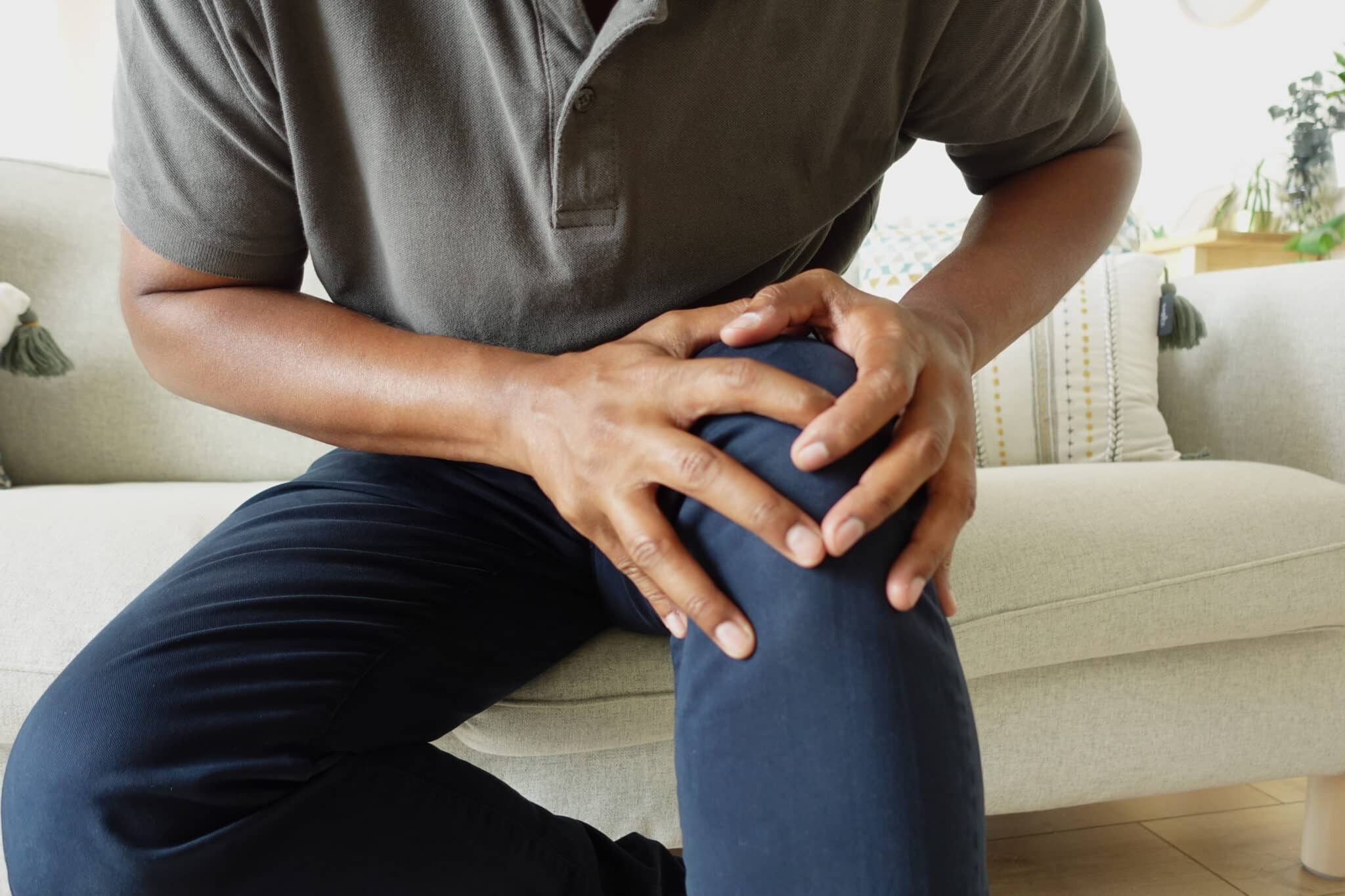
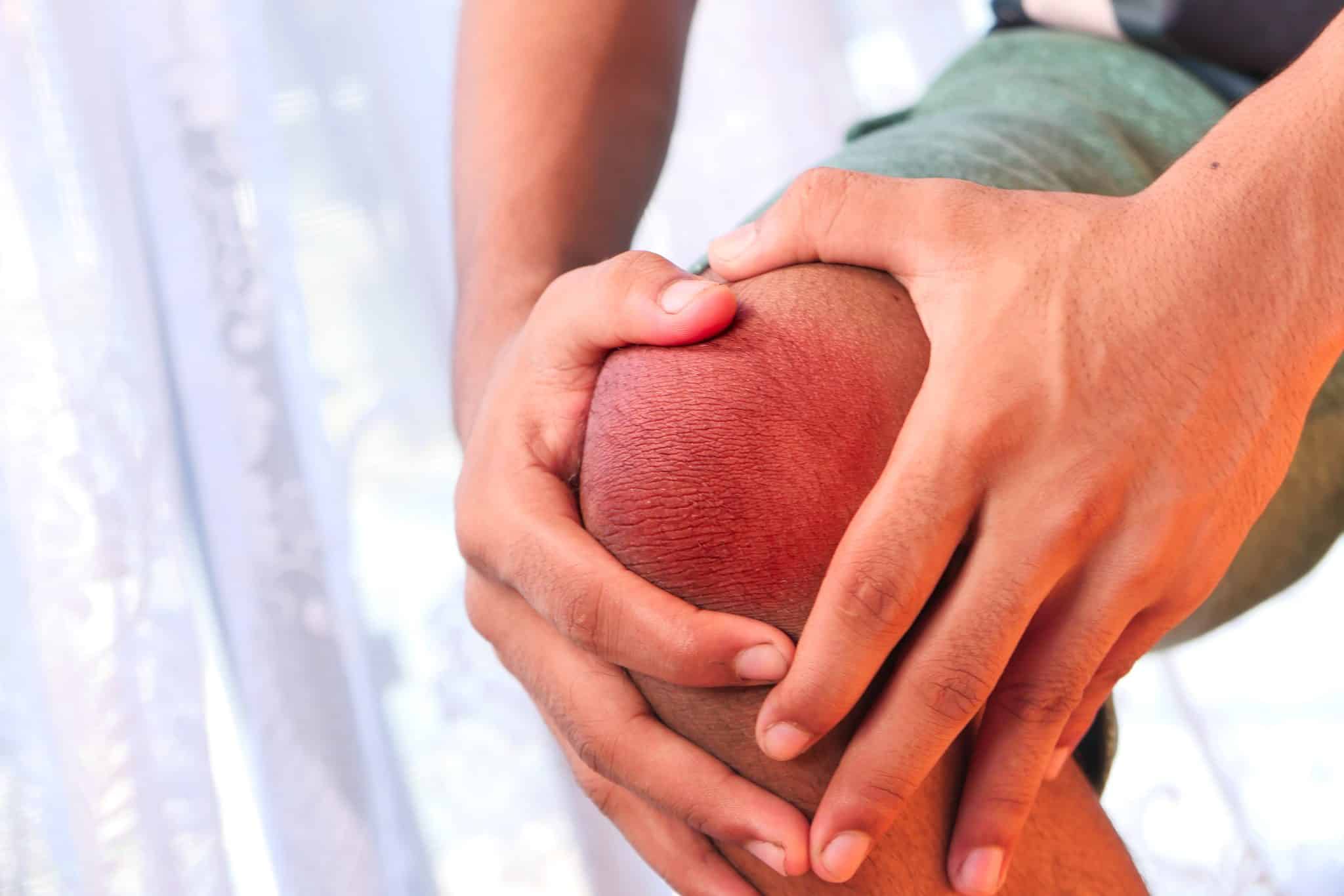
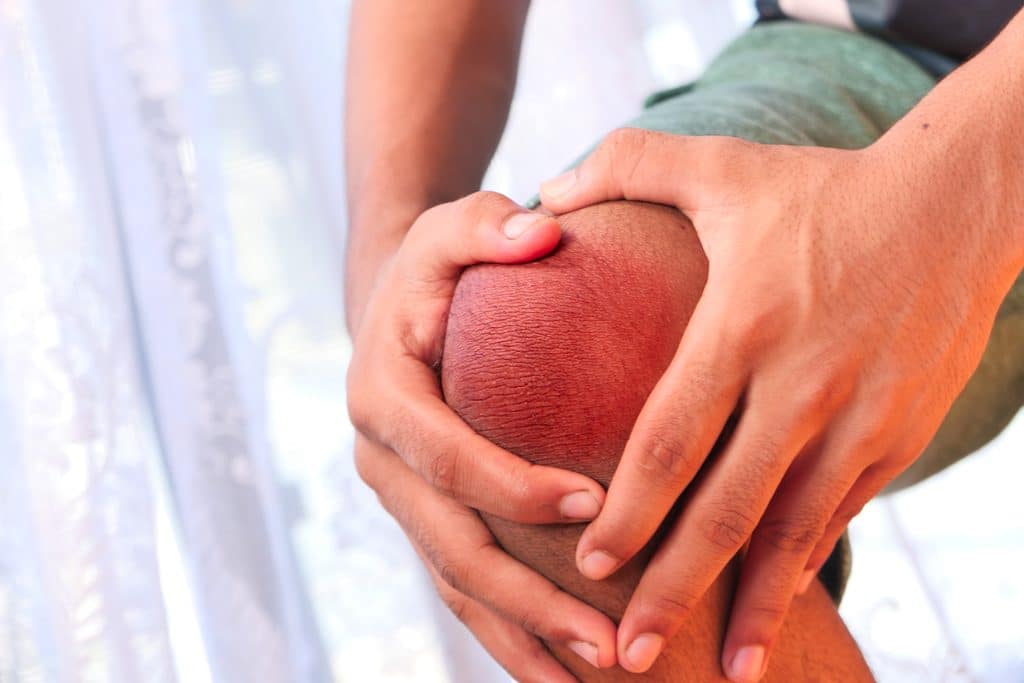
You catch it while pulling on socks. One knee looks fuller than the other, the skin above the kneecap feels tight, and the leg wants to rest slightly bent instead of flat. Maybe something happened on the field last weekend. Maybe nothing happened at all, which is somehow more unsettling.
The questions below are the ones we hear most often from patients across New Jersey: what the fluid actually is, why the speed of the swelling matters, what swelling behind the knee can mean, why a knee can puff up with no injury, and what happens when you come in for an exam.
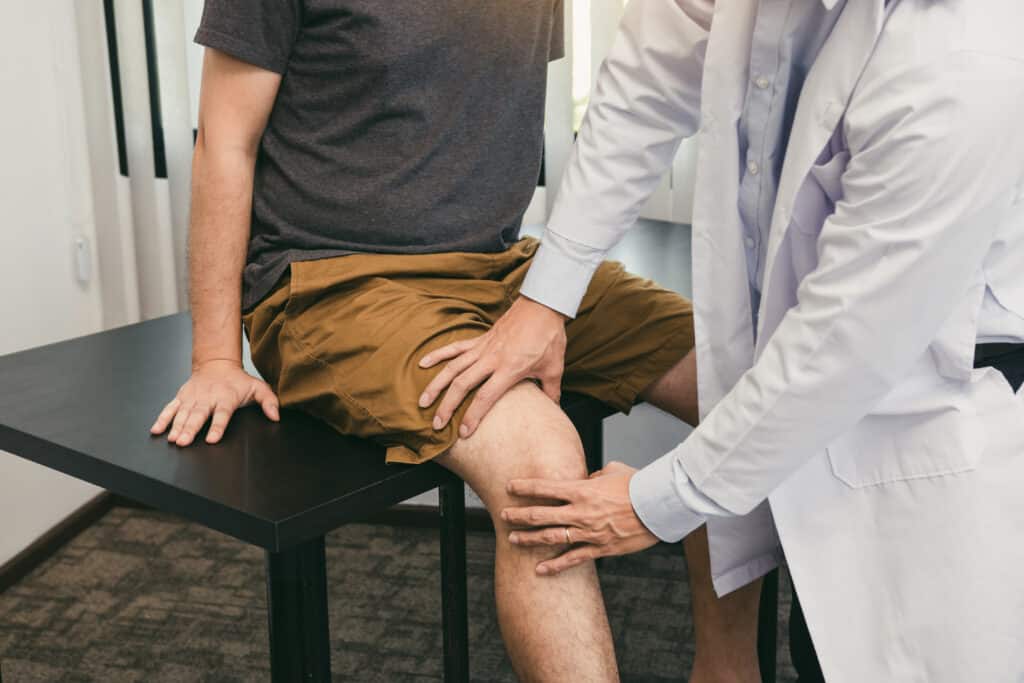
Your knee is lined with a thin tissue that makes a small amount of slippery fluid. Irritate that lining, or add torn tissue floating around or bleeding, and it makes far more. Doctors call the buildup an effusion. The joint feels tight, bending gets harder, and straightening all the way often becomes uncomfortable.
It matters a great deal. Speed is one of the first things we ask about, because blood fills a joint fast and an irritated joint lining fills it slowly.
These feel similar to you and look very different to us. Fluid inside the joint spreads around the kneecap and limits motion in every direction. A bursa is the small cushioning sac that sits between skin and bone at the front of the knee. When it swells, you get a movable lump you can often outline with a finger, and the joint underneath still bends reasonably well.
Telling those two apart changes everything that follows, from whether the fluid needs testing to how soon you can get back to kneeling work.
A knee that keeps making extra fluid can push some of it backward into a pouch behind the joint. That is a popliteal cyst, often called a Baker's cyst. It usually travels with arthritis or a meniscus problem rather than appearing on its own.
Most of the time it is a nuisance: fullness behind the knee, worse with deep bending. Occasionally a cyst leaks and the fluid tracks down into the calf, which then becomes painful, swollen and sometimes red. That picture can look almost identical to a blood clot in the leg, and the two are not something to guess about at home. Ultrasound is typically the first test used to tell them apart, and a leaked cyst usually calms down with conservative care.
New calf swelling with knee swelling is worth a call the same day. A leaked cyst and a blood clot can feel alike, and imaging settles the question quickly.
In New Jersey, yes, and we keep it on the list. Lyme disease is spread by tick bites, and when the infection goes unrecognized it can settle into a joint weeks to months later. The knee is the joint it favors.
What throws people off is the pattern. The swelling can be large while the pain stays milder than you would expect for a joint that size. It often involves one knee, may ease on its own, then return. Plenty of patients never saw a tick or a rash, and children sometimes wake up with a big swollen knee and a limp. Blood testing helps, and when Lyme arthritis is confirmed, antibiotics are the treatment rather than surgery.
The knee is very much fair game. Gout comes from uric acid crystals. A close cousin, calcium pyrophosphate deposition, is sometimes called pseudogout, and it has a fondness for larger joints like the knee and wrist.
Crystal flares tend to arrive abruptly. The joint turns hot, tender and swollen, often within a day, and the attack can last days to weeks before easing. Here is the catch. A crystal flare and a joint infection can look nearly identical from the outside, and a history of gout does not protect anyone from an infected knee. That is one of the main reasons we test the fluid rather than assume.
Possibly. Bleeding into a joint does not always require a dramatic injury. Anticoagulant medication, bleeding disorders and some liver conditions all raise the chance that a knee fills with blood after a minor twist, or with no clear trigger at all. Blood inside a joint is irritating to cartilage, so repeated episodes are not something to wait out.
Bring your medication list to the visit. Never stop a blood thinner on your own; that decision belongs with the prescriber who put you on it.
Because fluid in the joint quietly switches off part of the quadriceps. In arthritic knees, effusion has been linked to reduced quadriceps contraction and loss of thigh strength, which is why the leg can feel untrustworthy on stairs even when the pain is modest.
It also explains something patients notice later: the thigh on the swollen side starts to look smaller. Getting the swelling down and waking the muscle back up with guided physical therapy is often a bigger part of recovery than people expect.
Yes. Kids often underreport pain, so the first sign parents catch is a limp in the morning, clumsiness after a nap, or one knee that simply looks bigger.
Short-lived swelling after a fall or a game is common enough. Swelling that sticks around for weeks in the same joint is different, and when joint swelling in a child lasts about six weeks or longer, juvenile idiopathic arthritis enters the conversation. That condition can also affect the eyes, so it is managed alongside paediatric rheumatology rather than by an orthopaedic provider alone. We examine the knee and rule out injury and infection. Then we help you get to the right specialist without a long detour.
Most of the work is conversation and hands. We will ask how it started, what you felt or heard, whether the knee has swollen before, what medications you take, and whether you have had fever or illness recently. Then we examine both knees together, because your healthy side is the best comparison we have.
From there:
Two reasons. It answers questions, and it usually feels better afterward.
The fluid itself tells a story. Bloody fluid points toward bleeding inside the joint. Cloudy fluid raises concern for infection. Crystals under the microscope identify gout or its calcium cousin, and cultures show whether bacteria are present. When a knee is hot and swollen and infection is on the table, testing the fluid is the step that decides treatment, because an infected joint needs antibiotics and washing out rather than rest and ice.
Treatment follows the diagnosis, not the size of the swelling. Non-surgical care comes first for most causes.
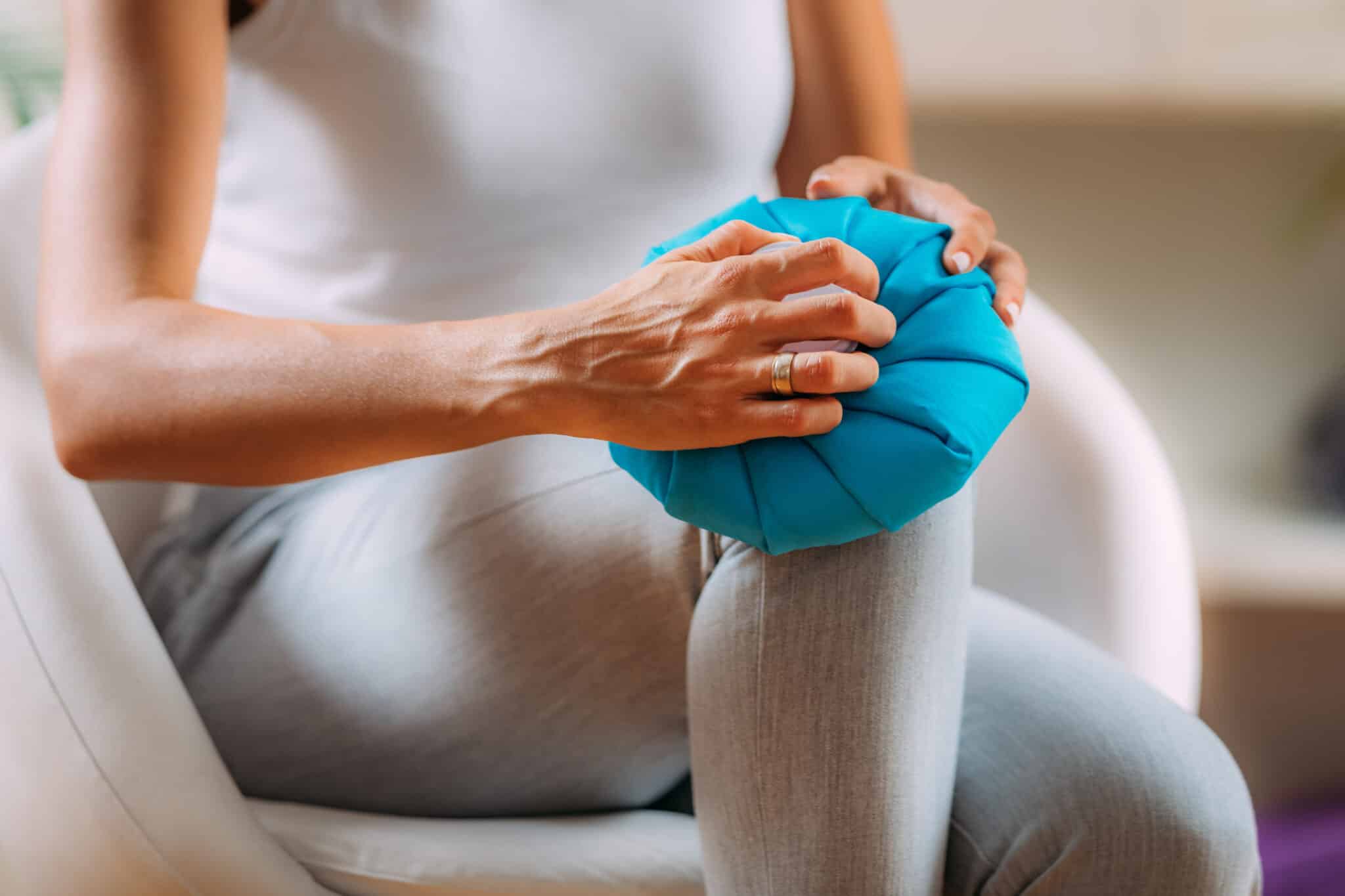
Keep it simple and keep it gentle. Back off the activity that aggravates it, use a cold pack for short stretches, prop the leg up when you're sitting, and try easy range of motion so the joint does not stiffen into a bent position. Over-the-counter anti-inflammatory medication helps many people, provided your other medical conditions and prescriptions allow it. A compression sleeve can take the edge off the tight feeling.
None of that treats a cause. If the knee is not clearly improving after a few days, or it keeps refilling after it settles, that pattern is worth an exam.
Go to emergency care for any of these:
Call OrthoNJ to schedule an exam if you have:
Bring us the details you have: when it started, what you were doing, whether it has happened before, and what medications you take. Our team can examine the knee, arrange imaging or fluid testing when it is needed, and start you on a plan that fits the cause rather than the symptom. Recovery timelines vary from person to person, and we will give you honest ranges instead of promises.
This information is for general education and is not a substitute for a medical evaluation. Talk with your OrthoNJ provider about your specific situation.
This treatment info is for informational purposes only. Treatment and recovery vary person to person, and you should consult with your treating physician and team for details on your treatment and recovery process.
Contact one of OrthoNJ's locations spread out through all of New Jersey.