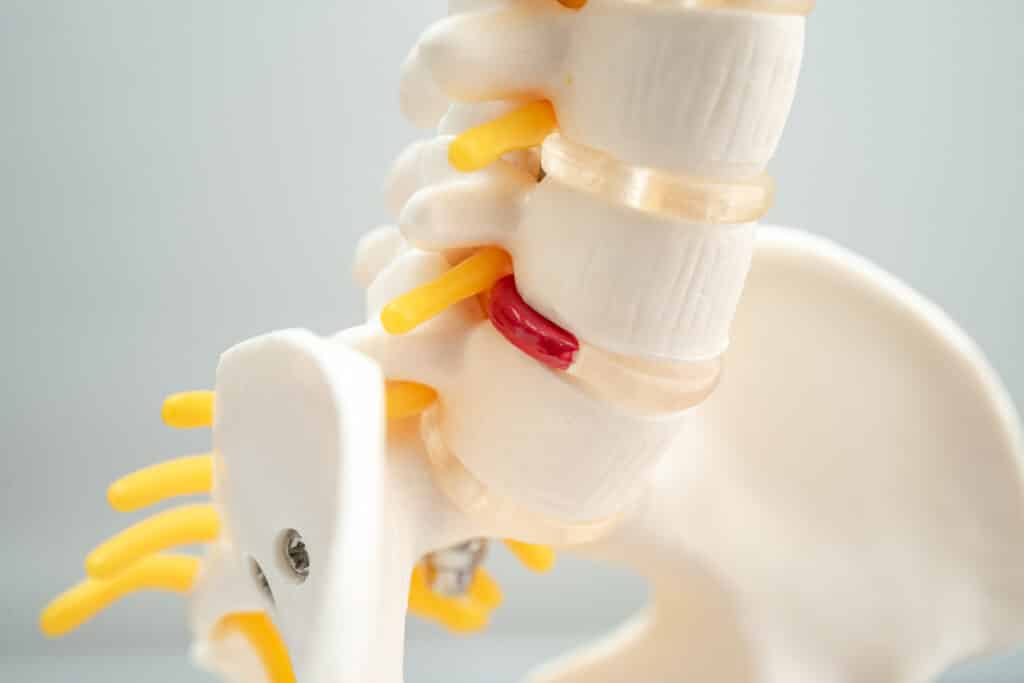
A slipped disc is a common term for a herniated disc. It is one possible cause of back or neck pain, but similar symptoms can also come from other conditions such as spinal stenosis, tumors, infections, or fractures. A clinician’s evaluation helps sort out the cause, and the team at OrthoNJ can help guide your next steps if symptoms are affecting daily life.
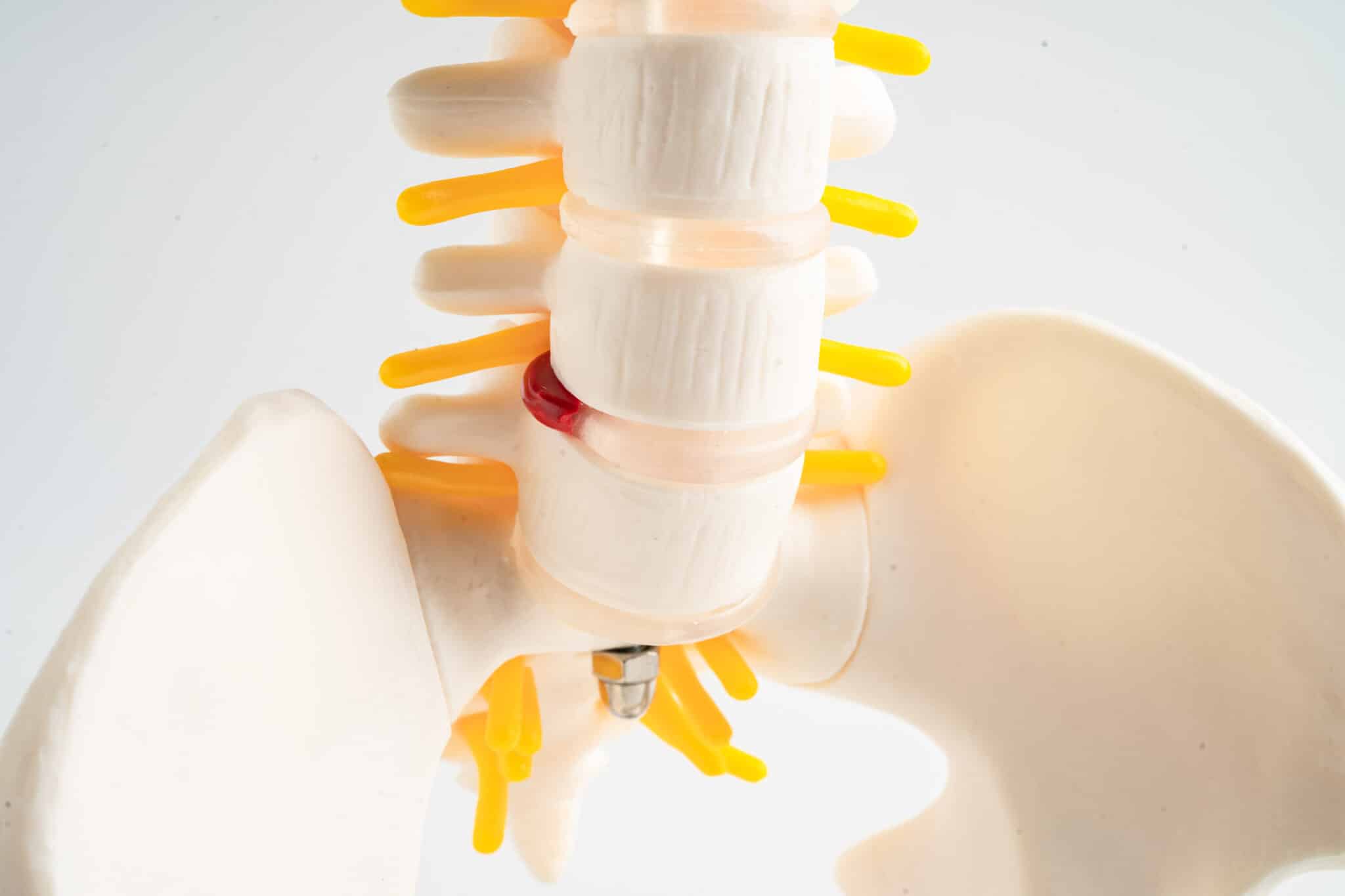
The discs in your spine act like cushions between the bones, which are called vertebrae. Each disc has a tougher outer layer and a softer center. When part of the inner material pushes outward through a tear in the outer layer, it is called a herniated disc.
You may also hear people call this a slipped disc or ruptured disc. The disc does not actually slip out of place. The problem is that disc material bulges or breaks through and may irritate nearby nerves.
Your spine is made up of bones stacked on top of each other with discs in between. These discs help absorb shock and allow smooth motion.
With a herniated disc, the soft inner portion presses through a weakened area in the outer ring. If that material touches or inflames a nearby nerve, it can lead to pain, numbness, tingling, or weakness.
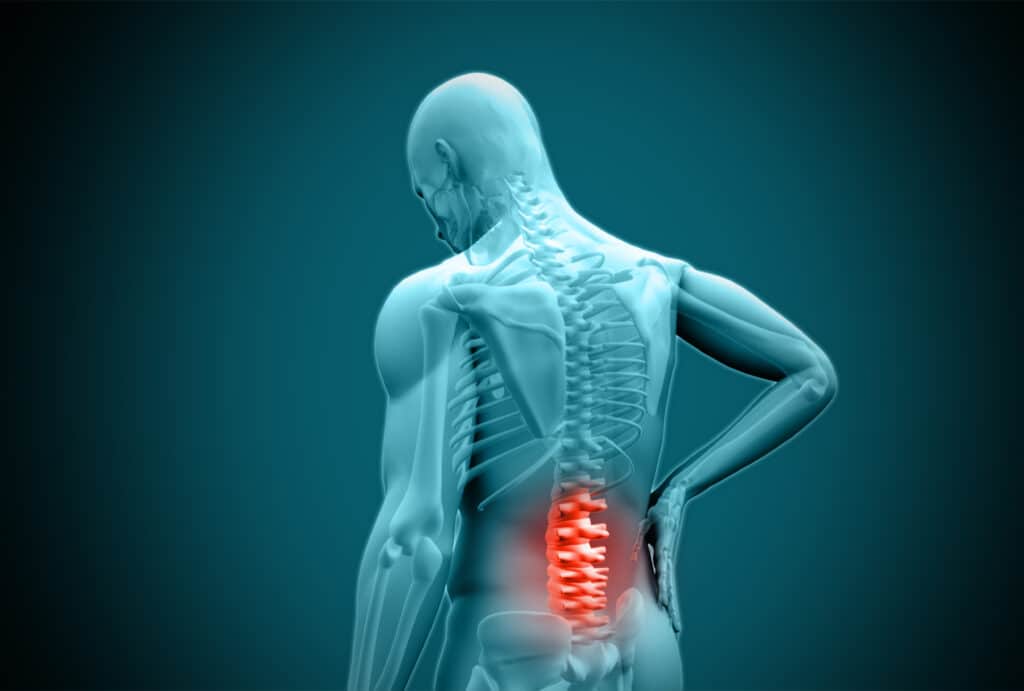
Disc herniations can happen in different parts of the spine, but they are most common in the lower back. They can also occur in the neck.
Many disc changes seen on imaging are part of normal aging. Not every herniated disc causes symptoms, and not every episode of back pain means a disc is the problem.
Some pain comes from the disc itself. Pain can also happen when nearby nerves become irritated or compressed.
In the lower back, this may cause pain that travels into the buttock, thigh, leg, or foot. This is often called sciatica when the sciatic nerve is involved. In the neck, symptoms may travel into the shoulder, arm, or hand.
Symptoms depend on where the disc herniation is and whether a nerve is affected. Some people have severe pain, while others have only mild discomfort or no symptoms at all.
Disc herniations may develop from gradual wear over time or after an injury. As discs age, they lose some water content and become less flexible, which can make them more likely to tear.
Evaluation usually starts with your medical history and a physical exam. Your doctor may ask when the pain began, where it travels, what makes it better or worse, and whether you have numbness or weakness.
The exam may include checking strength, reflexes, sensation, and how certain movements affect your symptoms. This helps determine whether a nerve may be involved.
| Test or Step | What it helps show |
|---|---|
| Medical history | How symptoms started and whether they fit a nerve pattern |
| Physical exam | Signs of nerve irritation, weakness, or loss of feeling |
| X-rays | Bone alignment and other structural issues, but not the disc itself |
| MRI | Detailed view of discs, nerves, and other soft tissues |
MRI is often the most useful imaging test when symptoms suggest a herniated disc and do not improve as expected. Imaging results still need to be matched with your symptoms and exam because MRI can show disc changes in people who have no pain.
Many people improve without surgery. Treatment depends on the severity of your symptoms, whether weakness is present, and how much the condition is limiting your life. As inflammation decreases, many disc herniations improve over time, and in some cases the herniated material can shrink or be resorbed by the body.
Most herniated discs do not require surgery. However, an operation may be discussed if your pain remains intense, if weakness is getting worse, or if symptoms continue despite a reasonable trial of nonoperative care.
The goal of surgery is usually to relieve pressure on the affected nerve. Your spine specialist will explain whether surgery makes sense in your situation and what recovery may involve.
Many people feel better over time with conservative treatment. Pain in the leg or arm from nerve irritation often improves as inflammation settles and the body gradually adapts. In some cases, the herniated material can also shrink or be resorbed by the body.
Recovery varies from person to person. Your symptoms, exam findings, imaging results, work demands, and overall health all play a role in how long improvement takes.
Seek prompt medical attention if you have any of the following:
If you are dealing with ongoing back pain, neck pain, or pain that travels into an arm or leg, OrthoNJ can evaluate the cause and discuss treatment options that fit your needs.
Yes. Slipped disc is a common term people use for a herniated disc. The disc usually does not slip out of place, but part of it pushes outward and may irritate a nerve.
Many people improve without surgery. Symptoms often become more manageable with time, activity changes, medication, and physical therapy.
No. Some disc herniations are found on imaging in people who do not have symptoms. That is why imaging has to be interpreted along with your history and physical exam.
Sciatica describes pain that travels along the path of the sciatic nerve, usually from the lower back into the buttock and down the leg. A herniated disc is one possible cause.
This information is for general education and is not a substitute for personal medical advice. If you have symptoms that concern you, talk with your doctor or schedule an evaluation with OrthoNJ.
This treatment info is for informational purposes only. Treatment and recovery vary person to person, and you should consult with your treating physician and team for details on your treatment and recovery process.
Contact one of OrthoNJ's locations spread out through all of New Jersey.