This guide explains what the meniscus is, how meniscus tears happen, common symptoms, how doctors diagnose the problem, treatment options, and what recovery often looks like. It is written for patients and families. If you have specific concerns, talk with your OrthoNJ provider about your individual situation.
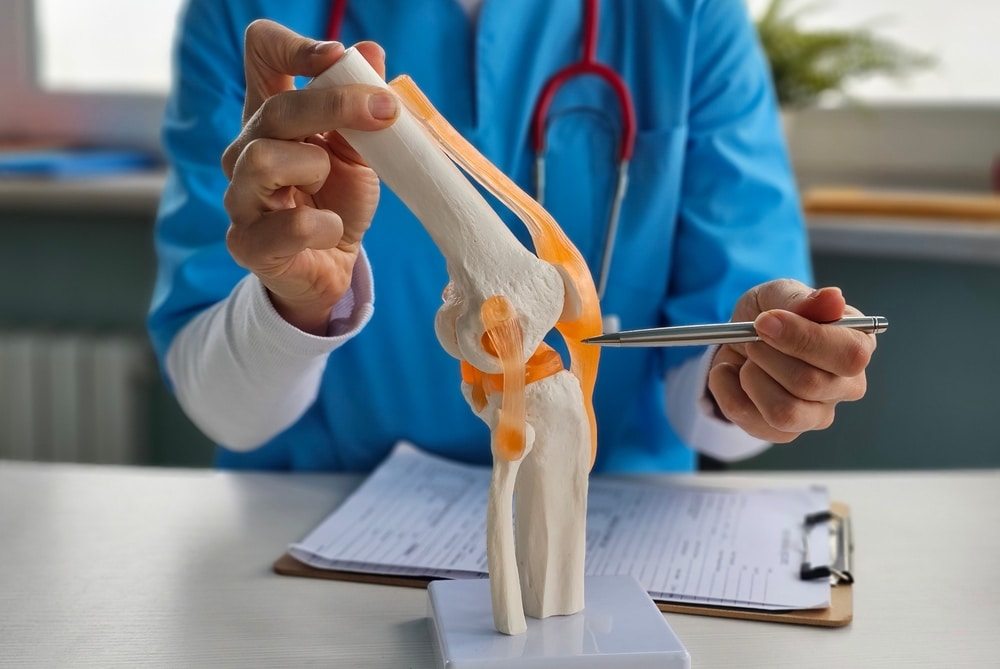
The meniscus is a C-shaped pad of tough cartilage that sits between the thighbone (femur) and shinbone (tibia) in each knee. You have two menisci in each knee, one on the inner side (medial) and one on the outer side (lateral).
The meniscus helps distribute weight, absorb shock, and maintain knee joint stability. It also helps the bones glide smoothly when you bend and straighten your knee. When the meniscus tears, the knee can become painful, swollen, or feel unstable.
Meniscus tears can result from a sudden injury or from gradual wear over time. In younger people and athletes, a tear often occurs when the knee twists while the foot is planted, such as during cutting, pivoting, or a sudden change of direction.
In middle-aged and older adults, the meniscus may weaken with age and everyday use. These degenerative tears can occur with simple movements such as squatting, kneeling, or stepping awkwardly, sometimes without clear injury.
Symptoms vary based on the type, size, and location of the tear. Some small tears cause only mild discomfort, while others make it hard to walk or bend the knee.
These symptoms can overlap with other knee conditions such as ligament injuries or arthritis. A careful exam and, when needed, imaging tests help confirm whether the meniscus is the main source of pain.
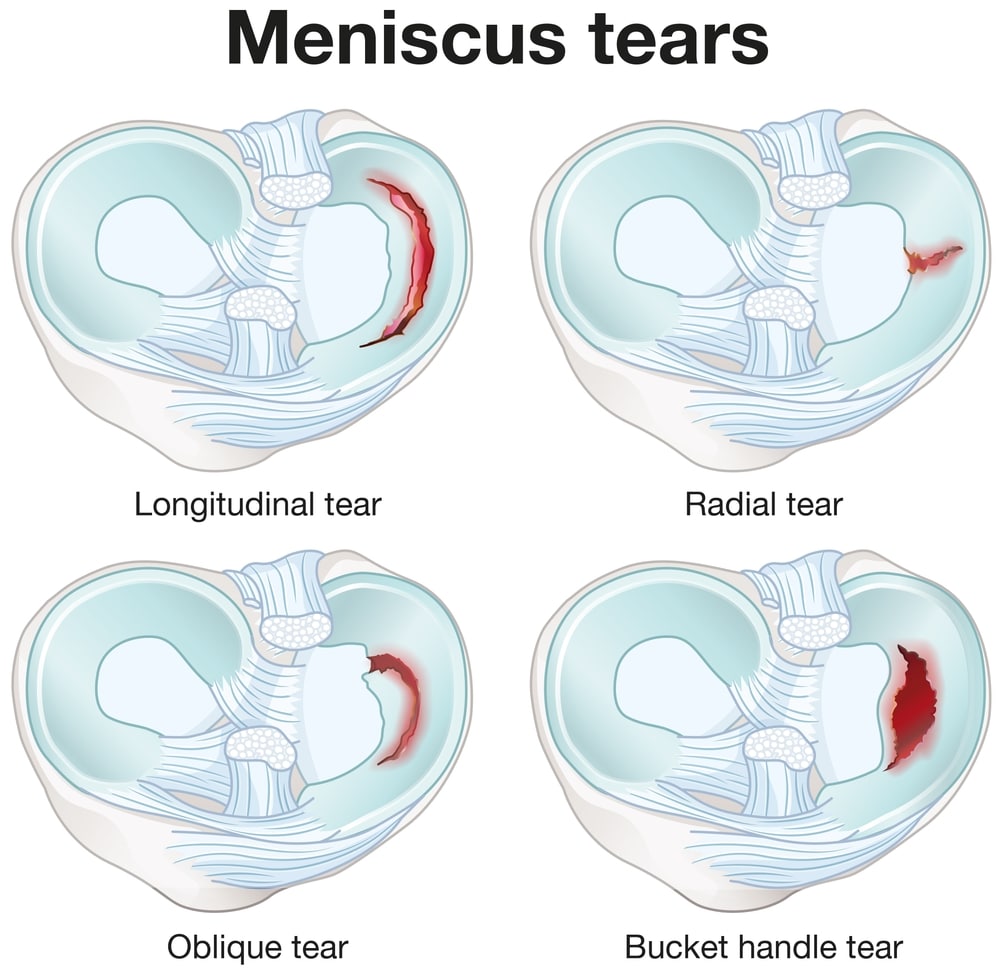
Meniscus tears can differ in shape, size, and location. These details are important because they influence which treatments are reasonable and how well the tissue might heal.
| Type of tear | Description |
|---|---|
| Vertical (longitudinal) tear | Runs along the length of the meniscus; some of these can be repaired if they are in a region with good blood supply. |
| Bucket-handle tear | A larger vertical tear where a piece of the meniscus flips into the joint, which can cause locking and difficulty straightening the knee. |
| Radial tear | A combination of different tear patterns, more common in degenerative knees, and often harder to repair. |
| Horizontal tear | Splits the meniscus into upper and lower parts; sometimes associated with degenerative changes or cysts. |
| Complex tear | Combination of different tear patterns, more common in degenerative knees and often harder to repair. |
Doctors also consider whether the tear is in the outer third of the meniscus, which has a more robust blood supply and better healing potential, or in the inner portion, which has less blood flow and may be less likely to heal on its own.
Evaluation starts with a detailed discussion of your symptoms and how the injury happened. Your doctor will ask about pain location, activities that worsen symptoms, whether the knee swells, and any locking or giving-way episodes.
A focused physical exam of the knee follows. The physician will assess your range of motion, areas of tenderness and swelling, and ligament stability. Specific tests that bend and twist the knee can help identify a meniscus tear.
Imaging and other tools are often used to clarify the diagnosis:
Not every meniscus tear needs surgery. Many people, especially those with smaller or degenerative tears, can improve with non-surgical care. Your treatment plan depends on your age, activity level, symptoms, and other knee conditions.
Common non-surgical treatments include:
Many people notice improvement over several weeks to a few months with non-surgical care. Your OrthoNJ provider can help you decide if this approach is appropriate for your situation.
Surgery may be considered if symptoms don't improve with non-surgical treatment, if the knee locks, or if the tear is in a part of the meniscus that has a reasonable chance to heal after repair. Active patients or athletes with certain tear patterns may be more likely to benefit from surgery.
Your surgeon will discuss the pros and cons of surgery based on your goals, tear type, and overall knee health. Decisions about surgery versus non-surgical treatment are highly individual and depend on tear pattern, age, activity level, and other knee conditions.
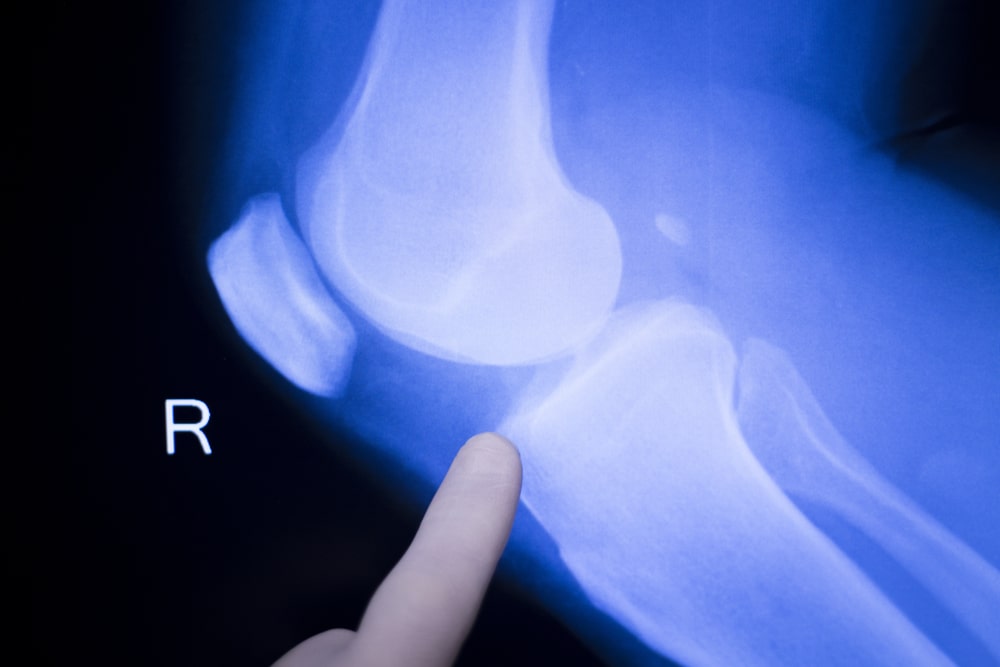
Most meniscus procedures are done arthroscopically using small incisions and a camera. The surgeon views the inside of the knee and uses specialized instruments to address the tear.
| Surgical option | What it involves |
|---|---|
| Meniscus repair | The torn pieces are sutured together to encourage healing. This is usually considered when the tear is in a region with better blood supply and in patients who can follow a more protected recovery. |
| Partial meniscectomy | The damaged portion of the meniscus is trimmed away while preserving as much healthy tissue as possible. This can relieve mechanical symptoms when the tear cannot be repaired. |
| Meniscus transplantation | In selected younger patients who have had most of their meniscus removed and continue to have pain, a donor meniscus may be transplanted. This is less common and used in specific situations. |
Whenever possible, surgeons aim to preserve meniscus tissue because it plays an important role in protecting the knee joint over time.
Rehabilitation is a key part of recovery, whether you are treated without surgery or after an operation. A structured program helps reduce pain, restore motion, build strength, and safely return you to daily activities, work, and sports.
Timelines vary from person to person. Return to desk work may occur within days to a few weeks, while return to heavy labor or sports can take several weeks to months, especially after a repair. Remember that decisions about surgery versus non-surgical treatment and expected recovery times are highly individual and depend on tear pattern, age, activity level, and other knee conditions. Your OrthoNJ team will guide your specific plan.
Timelines vary from person to person. Return to desk work may occur within days to a few weeks, while return to heavy labor or sports can take several weeks to months, especially after a repair. Your OrthoNJ team will guide your specific plan.
All treatments, including surgery, have potential risks. With arthroscopic meniscus surgery, possible complications include infection, blood clots, stiffness, persistent pain, or, rarely, damage to surrounding structures.
Removing meniscus tissue, even partially, may increase stress on the knee joint over time and can be associated with a higher risk of developing arthritis in the future. This is why preserving meniscus tissue when safely possible is often a priority.
Your surgeon will review the specific risks and benefits that apply to you before any procedure.
Contact a doctor if you experience any of the following:
If you are unsure what to do, OrthoNJ can evaluate your knee, review imaging if needed, and help outline reasonable next steps that match your goals.
It is important to understand that no treatment can guarantee complete pain relief or prevent future problems. Imaging findings must always be interpreted in conjunction with your symptoms and physical examination. Some meniscal changes on MRI may be related to normal aging and may not cause pain.
Your care plan should be tailored to your needs, activity level, and other knee issues such as ligament injuries or arthritis. This information is for general education and is not a substitute for personal medical advice.
If knee pain, swelling, or locking is limiting your daily life, consider scheduling an evaluation with OrthoNJ. Your provider will review your history, examine your knee, and discuss whether imaging or specific treatments are appropriate.
Timely assessment can help you understand your options and support a safe return to the activities that matter to you.
Some small or degenerative tears can become less painful over time with rest, physical therapy, and activity changes. Tears in the outer portion of the meniscus, where blood supply is better, have more potential to heal, especially in younger patients. Your doctor will help you understand whether non-surgical care is a reasonable option in your case.
Many people return to sports after a meniscus injury, with or without surgery. The timing depends on the type of tear, treatment, and the demands of your sport. Your care team will guide a gradual return once strength, motion, and control have recovered enough for your specific activity.
Some pain and swelling are expected after surgery, especially in the first few days. Anesthesia, pain medications, ice, and elevation are used to keep discomfort manageable. Pain usually improves as swelling goes down and you progress through rehabilitation.
A meniscus tear can increase the risk of developing knee arthritis over time, especially if a large portion of the meniscus is removed or if other joint damage is present. However, not everyone with a tear will develop significant arthritis. Protecting as much meniscus as possible, maintaining a healthy weight, and keeping the muscles around the knee strong may help lower stress on the joint.
Contact one of OrthoNJ's locations spread out through all of New Jersey.

This treatment info is for informational purposes only. Treatment and recovery vary person to person, and you should consult with your treating physician and team for details on your treatment and recovery process.