Learn about the anterior cruciate ligament (ACL), why it may need surgery, what happens during ACL reconstruction, and what recovery and rehab usually involve. The information is written for patients and families and can help you prepare for a visit with your OrthoNJ orthopedic specialist.

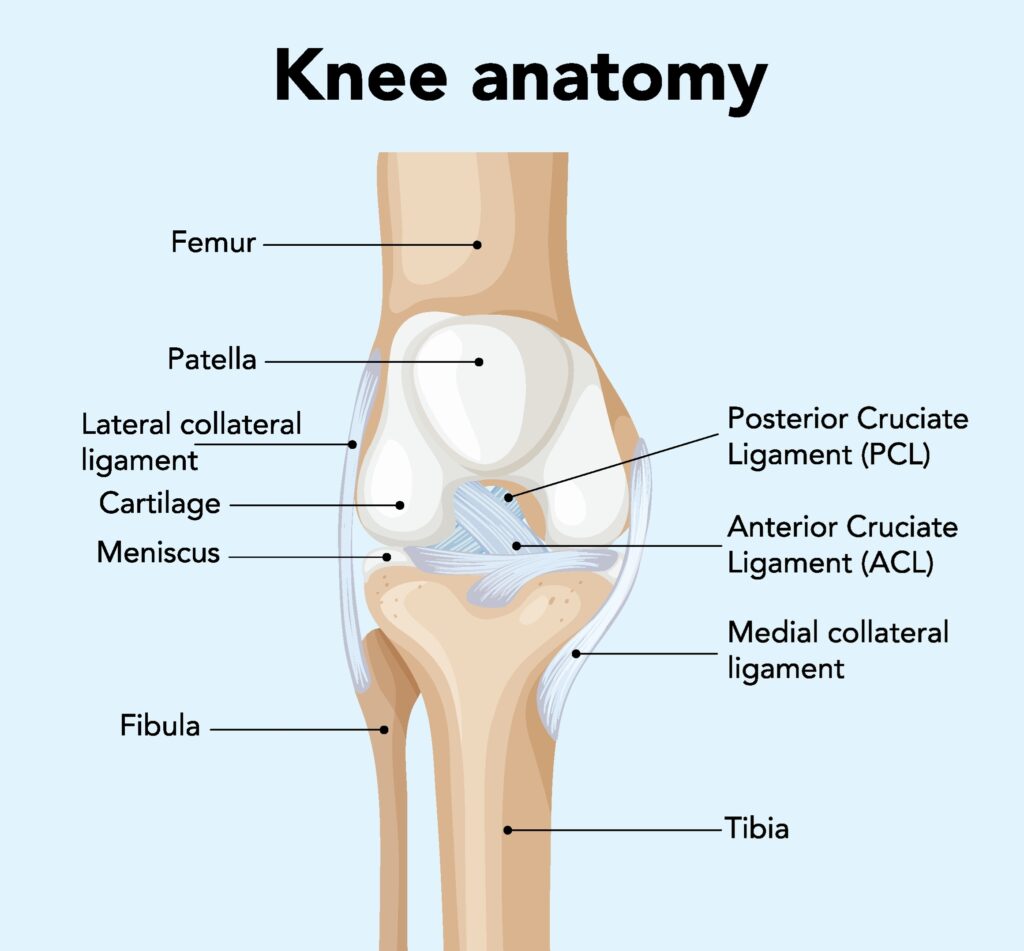
The ACL is one of the main ligaments that help stabilize your knee. It connects the thighbone (femur) to the shinbone (tibia) and keeps the tibia from sliding forward too far or twisting in an unsafe way. When the ACL tears, the knee can feel unstable, especially during pivoting, cutting, or sudden stopping and starting.
Some people with ACL tears can manage with bracing and physical therapy, especially if they do not do cutting or pivoting sports. Others benefit from ACL reconstruction, where the torn ligament is replaced with a graft. Your OrthoNJ team will help you decide which option fits your goals, activity level, and overall knee health.
The ACL is one of four main ligaments that keep your knee stable. It helps control forward movement and rotation of the tibia under the femur, which is essential for jumping, pivoting, and quick direction changes.
Most ACL tears happen when you stop suddenly, cut to one side, land awkwardly from a jump, or twist your knee when the foot is planted. Direct contact, like a tackle, can also cause a tear. People often feel or hear a pop, followed by pain, swelling, and a sense that the knee is giving way.
Not everyone with an ACL tear needs surgery. The decision is based on your symptoms, activity goals, and other knee findings such as meniscus or cartilage injuries.
Nonoperative care tends to be most successful for people with lower-demand activity levels and no frequent episodes of instability. Recurrent giving way can increase the risk of additional meniscus and cartilage damage, which is an important factor when deciding between non-surgical and surgical treatment.
Children and teens with open growth plates need special consideration. Surgeons choose techniques that protect growth while restoring stability. Your OrthoNJ specialist will explain which options are appropriate based on age and growth status.
Before recommending ACL reconstruction, your surgeon will review your history, examine your knee, and look at imaging such as MRI. They will talk with you about your sports, work demands, and expectations. Together, you will weigh the benefits and risks of surgery compared with non-surgical care.
Many people choose surgery when they want to return to cutting or pivoting sports and their knee feels unstable. Others prioritize lower-impact activities and may do well with focused rehab alone.
Good preparation helps surgery and recovery go more smoothly. Your care team will explain what to expect step by step.
ACL reconstruction does not stitch the old ligament back together. Instead, the surgeon replaces it with a graft, which acts as a scaffold while your body heals and forms a new ligament-like structure over time.
The main graft choices are:
Each option has pros and cons related to healing, graft size, and donor site discomfort. In younger, high-demand athletes, many surgeons often prefer autografts because some studies show higher re-tear rates with allografts in this group. Graft selection is individualized based on age, activity level, previous surgeries, and surgeon experience. Your OrthoNJ surgeon will review which graft type is recommended for your situation and why.
ACL reconstruction is usually done arthroscopically, using small incisions and a camera placed inside the knee. Most people go home the same day.
The whole procedure typically takes a couple of hours, although time varies based on whether other knee injuries are treated at the same time.
After surgery, you will spend time in a recovery area while your anesthesia wears off. Your team will monitor your vital signs, pain level, and ability to move your toes and ankle.
Rehab is a major part of ACL recovery. The surgery rebuilds stability, but physical therapy helps you regain strength, motion, and confidence in the knee.
Rehabilitation usually follows a stepwise plan. Timelines vary, and your program will be tailored to your progress and any additional procedures done during surgery.
Timelines can range from several months to a year or more for high-level pivoting sports. Your OrthoNJ provider and physical therapist will guide progress based on how your knee responds, rather than the calendar alone.
Most people can put some weight on the leg with crutches shortly after surgery, following their surgeon's instructions. Range-of-motion exercises start early and progress as tolerated.
Return to driving typically depends on which leg was operated on, what medicines you are taking, and whether you can control the car safely. Your surgeon will provide guidance at follow-up visits.
Many patients return to non-strenuous work or school within a couple of weeks, especially if they can sit and elevate the leg. Jobs that require heavy lifting, climbing, or prolonged standing usually require more time away or temporary restrictions.
ACL reconstruction is a common procedure, but like all surgeries, it has potential risks. Your surgeon will review these in detail and answer your questions.
Careful rehab, following weight-bearing and activity instructions, and keeping follow-up appointments can help lower some risks and catch problems early if they occur.
Contact your surgeon or another medical professional promptly if you notice any of the following after ACL surgery:
If you are unsure whether a symptom is serious, it is safer to reach out for guidance.
Some people manage an ACL tear without reconstruction. This typically involves structured physical therapy, activity modification, and sometimes bracing during higher-risk activities.
Nonoperative treatment tends to be most successful in patients with lower-demand activities and no frequent instability episodes. Recurrent knee instability can increase the risk of additional damage to the meniscus and cartilage. Your OrthoNJ provider will discuss these issues so you understand the trade-offs between non-surgical and surgical care.
ACL reconstruction can improve knee stability and help many people return to sports and active work, but results vary. Factors such as age, type of sport, associated injuries, and how closely you follow rehab affect outcomes.
No surgery can guarantee a specific result or eliminate all risk of future injury. Imaging findings and exam results are just part of the picture. Your goals, general health, and response to therapy all matter in planning treatment.
If you have had a knee injury, ongoing instability, or pain that limits what you enjoy, consider scheduling an evaluation with an OrthoNJ orthopedic specialist. We can review your history, examine your knee, and discuss imaging and treatment options that fit your activity level and goals.
This information is meant for general education and is not a substitute for medical advice about your specific situation. Your OrthoNJ team can help you choose a plan that matches your needs and supports your safest return to work, school, and sports.
Contact one of OrthoNJ's locations spread out through all of New Jersey.
This treatment info is for informational purposes only. Treatment and recovery vary person to person, and you should consult with your treating physician and team for details on your treatment and recovery process.